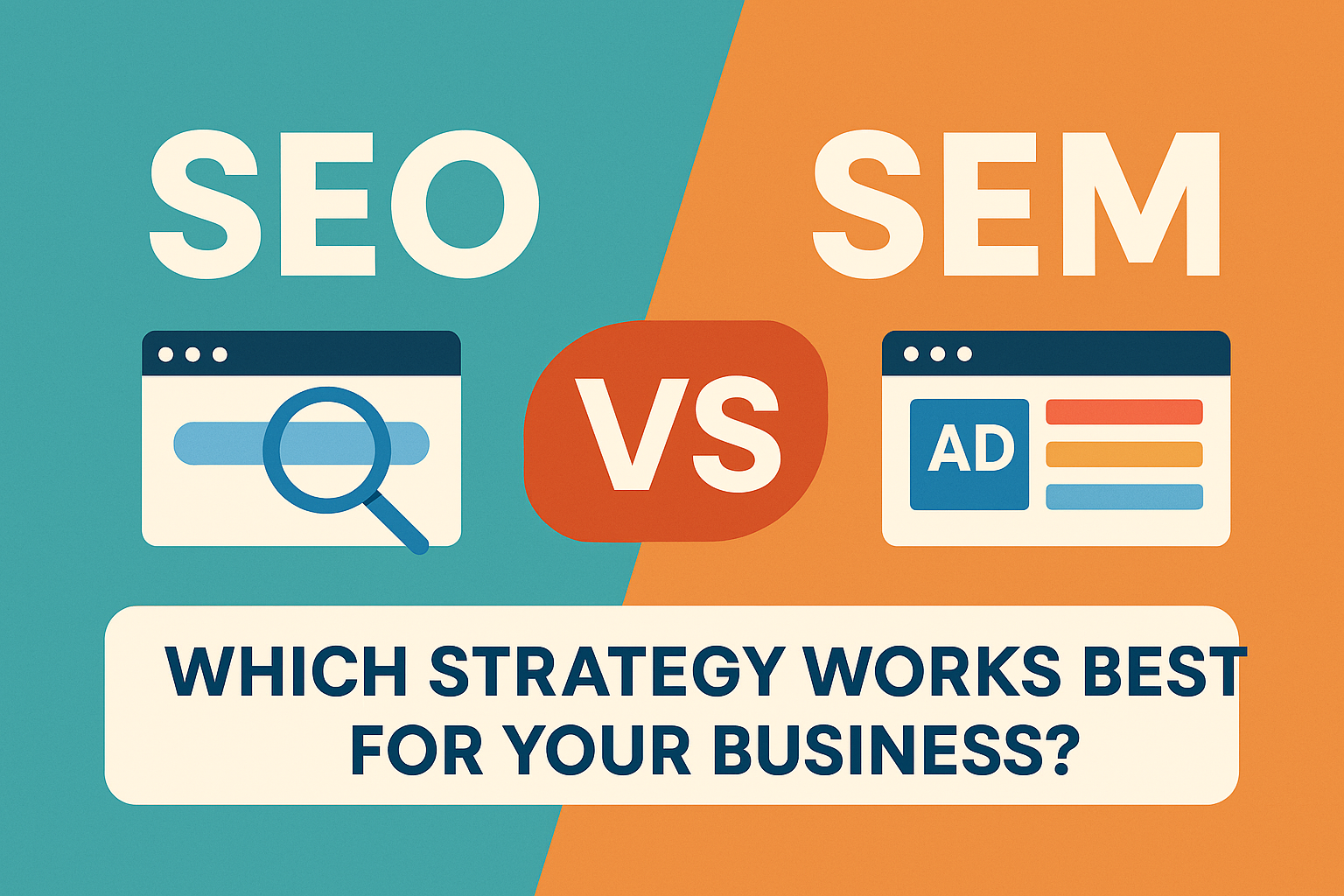
SEO vs. SEM: Which Strategy Works Best for Your Business?
Decoding the Digital Dilemma
In today’s digital-first world, visibility is everything. Whether you're a startup founder, a local business owner, or a seasoned marketer, you've likely asked: Should I invest in SEO or SEM? The answer isn’t one-size-fits-all—it depends on your goals, budget, timeline, and audience.
This guide breaks down the strengths, weaknesses, and strategic use cases of both Search Engine Optimization (SEO) and Search Engine Marketing (SEM), helping you choose the right path for your business.
🧠 What Is SEO?
Search Engine Optimization (SEO) is the practice of improving your website’s visibility in organic (non-paid) search results.
Key Components:
- On-page SEO: Content quality, keyword usage, meta tags, internal linking
- Technical SEO: Site speed, mobile responsiveness, crawlability
- Off-page SEO: Backlinks, social signals, domain authority
Pros:
- Long-term traffic growth
- Builds trust and credibility
- Cost-effective over time
Cons:
- Takes time to see results
- Requires consistent content and optimization
- Algorithm changes can impact rankings
💰 What Is SEM?
Search Engine Marketing (SEM) refers to paid strategies to appear in search results—most commonly through Pay-Per-Click (PPC) ads like Google Ads.
Key Components:
- Keyword bidding
- Ad copywriting
- Landing page optimization
- Budget management
Pros:
- Immediate visibility
- Highly targeted
- Scalable and measurable
Cons:
- Can be expensive
- Stops working when you stop paying
- Requires ongoing optimization
🎯 SEO vs. SEM: Head-to-Head Comparison
| Feature | SEO | SEM |
|---|---|---|
| Cost | Low ongoing cost | Pay-per-click |
| Speed | Slow build-up | Immediate results |
| Longevity | Long-term traffic | Short-term visibility |
| Trust Factor | High (organic results) | Lower (ads are marked) |
| Control | Limited (algorithm-driven) | High (you control targeting) |
| Conversion Rate | Moderate | High (intent-driven clicks) |
🧩 Which Strategy Works Best for Your Business?
The answer depends on your business type, goals, and resources.
Choose SEO if:
- You want sustainable, long-term growth
- You have time to build authority
- You’re focused on content marketing
Choose SEM if:
- You need quick results (e.g., product launch, seasonal campaign)
- You have a flexible ad budget
- You want to target specific keywords or audiences
Combine Both if:
- You want to dominate both paid and organic search
- You’re running a competitive campaign
- You want to test keywords before investing in SEO
📈 Real-World Examples
SEO Success:
A local bakery optimized its blog posts for “best cupcakes in Toronto.” Within 6 months, organic traffic tripled, and they ranked #1 for their target keyword.
SEM Success:
An e-commerce brand launched Google Ads targeting “eco-friendly backpacks.” They saw a 400% ROI in 30 days and scaled their campaign globally.
🛠️ Tools to Help You Decide
For SEO:
- Google Search Console
- Ahrefs / SEMrush
- Yoast SEO (WordPress)
For SEM:
- Google Ads
- Microsoft Advertising
- SpyFu / AdEspresso
🔍 How to Measure Success
SEO Metrics:
- Organic traffic
- Keyword rankings
- Bounce rate
- Backlink profile
SEM Metrics:
- Click-through rate (CTR)
- Cost-per-click (CPC)
- Conversion rate
- Return on ad spend (ROAS) 👨🏼💻 See more related topics
🧠 Final Thoughts
SEO and SEM aren’t rivals—they’re complementary tools. SEO builds your foundation, while SEM accelerates your reach. The smartest businesses use both strategically, adjusting based on goals, seasonality, and performance.
If you’re still unsure which path to take, start with a hybrid approach. Test keywords with SEM, build content around what works, and invest in SEO for long-term growth.